Machu Picchu: The Inca City Hidden in Peru's Andes
Perched high in Peru's Andes, Machu Picchu stands apart from other ancient sites. Its location appears almost chosen by the mountains themselves.
Welcome to Chronicle of Creativity! Join me as we explore the exciting world of IT. From emerging technologies like AI, cybersecurity to software development, my blogs also provide valuable content for tech enthusiasts and beginners alike. Discover startup culture, tech gadgets, and societal impact and all sorts of information related to travel and guides, experiences of solo vloggers. Let's unravel the mysteries and embrace the limitless possibilities of IT together.
Perched high in Peru's Andes, Machu Picchu stands apart from other ancient sites. Its location appears almost chosen by the mountains themselves.
The scale of Rohtas Fort is immediately striking. Stone walls rise above rugged hills, massive gates stand firm, and the atmosphere conveys a sense of antiquity surpassing the modern road leading to the site. Located near Jhelum in Punjab, Pakistan, Rohtas Fort continues to project an aura of defense rather than hospitality.
This significance underpins the site's enduring appeal. Travelers are drawn by its vistas, history enthusiasts by its narrative, and UNESCO recognizes it as a World Heritage Site for its distinctive character. To truly understand Rohtas Fort, it is essential to explore the origins of its construction and the intentions of the ruler who commissioned it.
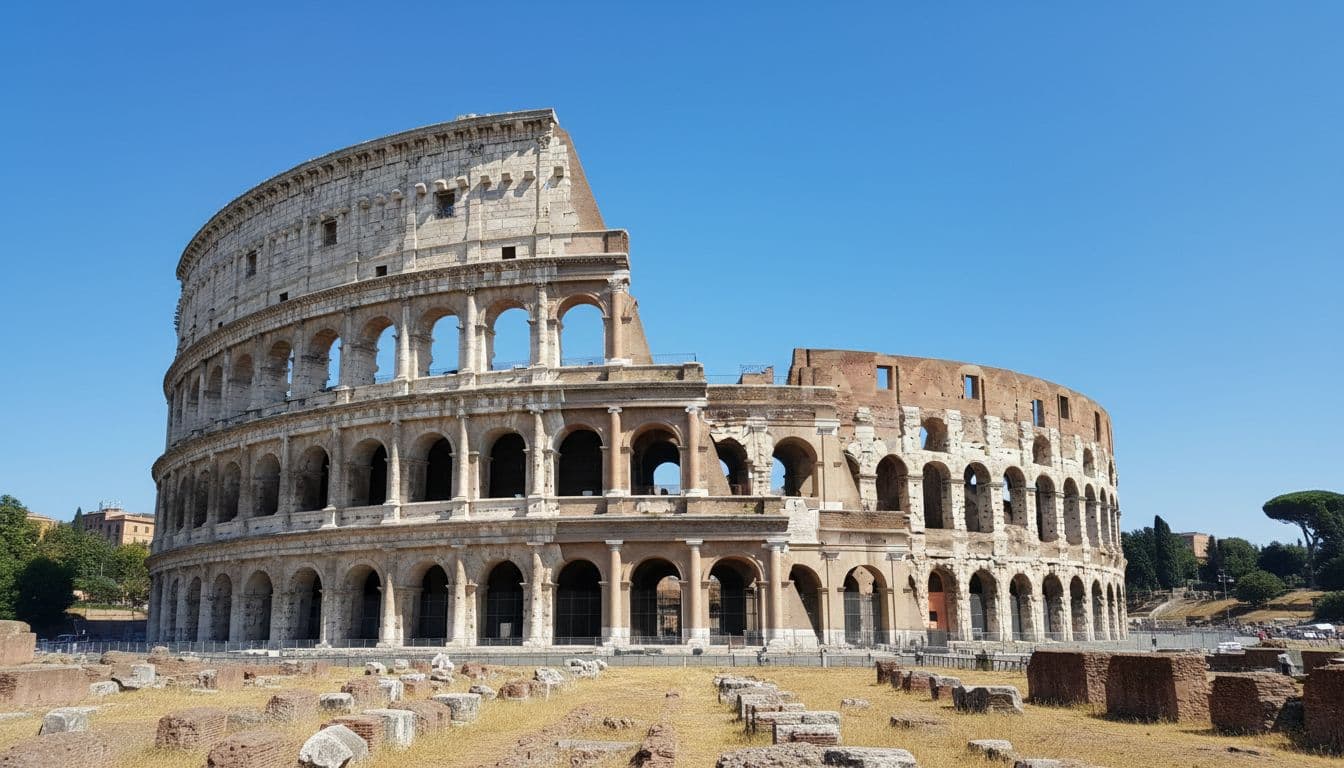
The Colosseum is one of the most well-known ancient structures. Even in ruins, it has the strength of a man-made mountain to hold Rome's skyline together, setting the stage for its lasting impact.
If you're wondering why it still draws large audiences, age is only half of the answer. This enduring presence is tied to a plot involving imperial intrigue, smart engineering, public entertainment, and centuries of harm and repair. To truly comprehend its significance, consider how it was created, what transpired within, and why it remains relevant to Rome today. This combination transforms a well-known landmark into a destination people remember for years.
The Colosseum was not an unplanned project. Emperor Vespasian began construction about AD 72, and Titus opened it in AD 80. Domitian eventually completed more of the subterranean infrastructure. Stone, concrete, and brick were utilized to construct an oval stadium capable of accommodating tens of thousands of people. For the Romans, this demonstrated that their empire could expand on a scale that few others could equal.
The monument also communicated a message. Rome had seen civil strife following Nero's death, and the new Flavian rulers need popular faith. Vespasian picked property that Nero had reserved for himself, where a private lake formerly existed. Giving that place back to the people demonstrated both power and kindness. When Titus inaugurated the stadium with elaborate festivities, the family transformed architecture into politics. In Rome, public structures served as political instruments.

The design was both sophisticated and enormous. Rings of arches distributed the weight, while hallways and stairways transported crowds through the structure at startling speed. Numbered entries directed individuals to the appropriate sections, allowing thousands to enter and exit without causing confusion. The outer shell formerly rose around 160 feet, contributing to the impression. The oval form put people close to the action. Later development beneath the arena included tunnels, lifts, and trapdoors for large events. Modern stadiums still follow this fundamental reasoning because it works.
Inside, the Colosseum served as a public entertainment machine. The arena floor, which was originally covered with sand, transformed state power into a spectacle that everyone could enjoy together. The hardwood floor concealed most of the equipment beneath. Games honored rulers, commemorated festivals, and provided the audience with a shared experience. However, the location served as a reminder of who was in charge.
Crowds gathered to see gladiator fights, animal hunts, staged dramas, and, on occasion, executions. These activities were well planned and adhered to strict timetables and guidelines. Workers oversaw landscape, animals, fights, and scheduling, so the day felt planned rather than chaotic. Some productions employed set and accessories to recreate mythological situations onstage. Some gladiators trained for years before becoming popular with the populace. For the Romans, this was both mass amusement and civic theater. Emperors could pay for the games, feed the multitude, and seem benevolent to the city.
Where you sat was almost as important as what you saw. The Emperor and Senators enjoyed the finest seats. Wealthy individuals sat near together, while common folks occupied the upper rows. Women and impoverished spectators were forced further up. People with the lowest status, including many enslaved or dependent guests, remained on the fringes. The arena represented Roman society in stone. Entertainment did not eliminate inequality. It presented it.
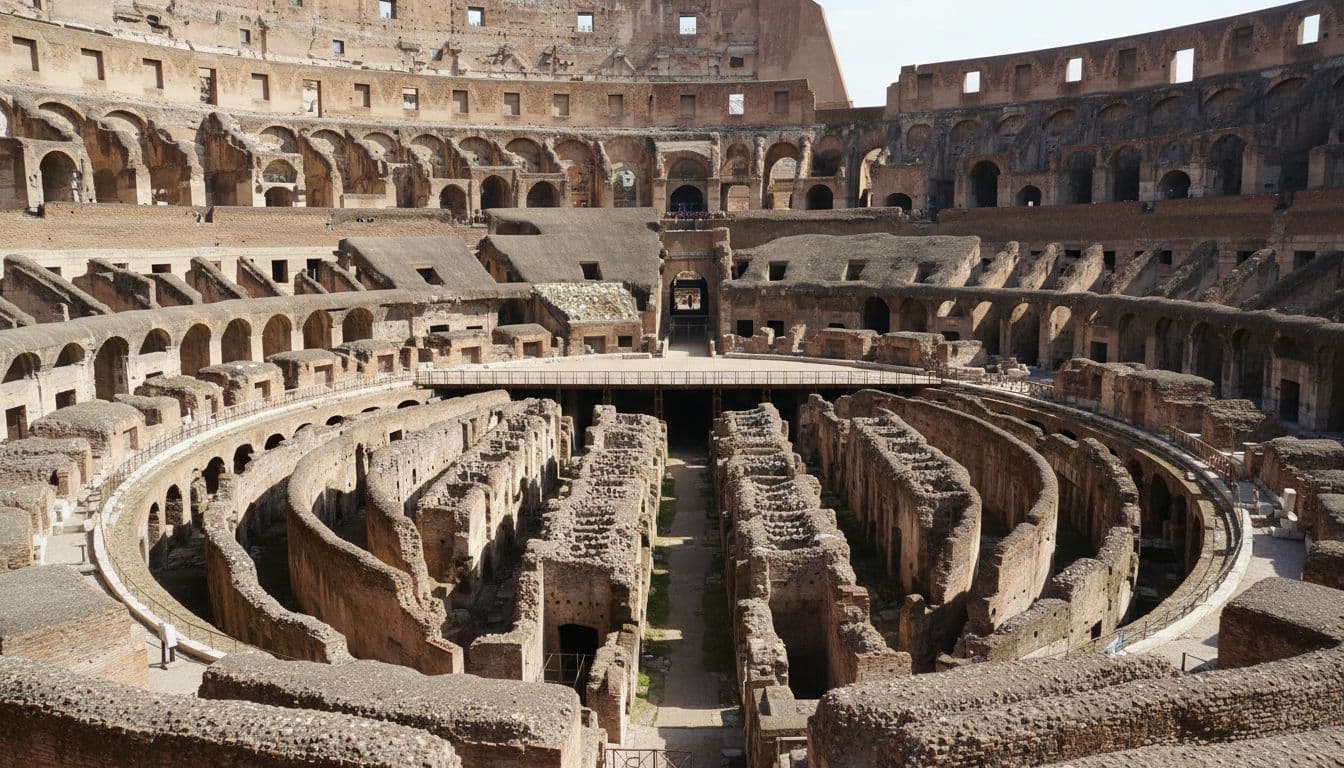
The Colosseum is now partially shattered, yet its form still strikes you at once. Large parts of the outside wall remain, and the interior rings still demonstrate how the structure previously functioned. Restoration and careful management now assist to conserve what remains. Tourism keeps the place active during much of the year. Because it is near the Roman Forum and Palatine Hill, a visit ties one monument to the larger tale of ancient Rome. It is also included on the UNESCO World Heritage list for Rome's historic core.
The missing parts are an integral part of the lesson. Over centuries, earthquakes ravaged the edifice, and builders eventually repurposed portions of its stone in churches, palaces, and other Roman structures. What remains, including arches, hallways, sitting lines, and open basement rooms, provide visitors with a good picture of the structure's bones. The arena floor was previously above the hypogeum, as may be seen in the network of rooms below. The ruin seems both open and precise.
The Colosseum is worth seeing since photographs flatten it. In person, the size is easier to understand, and the stone's weathering adds to the sense of time. Travelers may combine it with surrounding ruins in a single stroll, while scholars and history buffs have a rare opportunity to interpret architecture practically like a text. That is why it remains a must-see attraction in Rome. Even individuals who know little about Rome frequently depart with a better understanding of how the empire appeared in everyday life.
⭐ Rating: 5/5
Mohenjo-Daro's major habitation dates between 2500 BCE and 1900 BCE, during the Mature Harappan era of the Indus Valley Civilisation. The city was established along the Indus River in what is now Larkana District, Sindh, Pakistan.
The Great Bath is one of Mohenjo-Daro's most well-known buildings. The pool, which was around 12 meters long, 7 meters broad, and 2.4 meters deep, was lined with carefully fitted bricks and waterproofed with bitumen. Many academics assume it was utilized for ritual bathing or ceremonial activities. The city's modern drainage system consisted of covered pipes that carried wastewater away, and many residences had private bathing rooms connected to these drains. More than 700 wells have been located on the site, providing inhabitants with relatively easy access to water. The city as a whole used standardized baked bricks, which produced sturdy and reliable construction.
Most homes were built with baked bricks to withstand floods. Many had central courtyards, and entrances often opened into side alleys instead of main streets.
Some of the structures featured higher levels, demonstrating advanced architectural techniques. Street widths varied, and the city's organized arrangement facilitated the efficient circulation of people and products.
Archaeological evidence indicates that the city was rebuilt multiple times owing to floods and rising ground levels caused by accumulated debris and river deposits.
Craft production played an important role in city life. Specialized workshops produced beads, shell ornaments, pottery, copper tools, and bronze artifacts.
The undeciphered Indus script remains one of the civilization's biggest mysteries. Seals, ceramics, and tiny tablets all bear short inscriptions, which are generally accompanied by animal symbols like bulls or the so-called "unicorn."
The writing contains hundreds of different signs, but the remaining phrases are extremely brief, making decipherment difficult. Some researchers claim ties to Dravidian languages, but no idea has gained general approval.
Without lengthier inscriptions or bilingual writings, much about Harappan politics, religion, and language is unknown.
Religious life at Mohenjo-Daro is still not completely understood. Terracotta female figures may symbolize fertility emblems or mother deities, however interpretations are debatable.
The legendary "Pashupati Seal" depicts a sitting horned figure surrounded by animals. Some historians have proposed parallels with later Hindu images of Shiva, although any links are hypothetical.
Mohenjo-Daro, like many other Indus civilizations, fell around 1900 BCE. Scholars usually assume that the collapse was caused by the combination of environmental and economic reasons, rather than a single catastrophic event.
Mohenjo-Daro was designated a UNESCO World Heritage Site in 1980. However, the site currently confronts significant preservation issues, including salt degradation, groundwater erosion, floods, and weathering.
Mohenjo-Daro is a remarkable example of early urban design, engineering, and civic organization. Its drainage systems, uniform construction, and well-planned streets reflect a culture with an extensive understanding of architecture and public administration.
Standing in front of the Pyramids of Giza, you can feel the weight of about 4,500 years. West of Cairo, Egypt, these massive structures rise from the desert plains. They stand for the pinnacle of Old Kingdom authority. Only the Great Pyramid of Khufu is still mostly intact among the Seven Wonders of the Ancient World. Menkaure's pyramid is the smallest, but Khafre's seems taller due to elevation. When combined, they create a necropolis that welcomes more than 10 million tourists each year.
Within bigger funeral complexes, the pyramids functioned as royal tombs. The Egyptians thought the monarch was connected to the deity of the afterlife, Osiris. A route to the skies was represented by the pyramid.
Khufu's pyramid took between 20 and 25 years to build. Khafre and Menkaure followed over the next few decades.
The Great Pyramid was initially 146.6 meters (481 feet) tall, but it is presently at 138.8 meters. Each side of the base measures around 230.4 meters.
The entrance is on the north face, approximately 17 meters above ground. The key features include:
Blocks were carved using copper tools and stone pounders. Granite was carried from Aswan (~800 km) via the Nile.
The pyramids' exact alignment shows astronomical expertise, presumably based on stars such as Thuban. Construction perfection remains exceptional, with tight stone joints and precise geometry.
The Giza Pyramids remain iconic symbols of ancient engineering and imperial ambition. From Khufu's Great Pyramid to the Sphinx, they all demonstrate the Fourth Dynasty's dominance. Modern discoveries continue to provide new insights, ensuring that their legacy lives on.
The huge stones that make up Stonehenge were put up about 5,000 years ago. Each one weighs several tons. There are no written records that explain how the Neolithic people built this with the limited technology they had. Over time, proof has vanished, and unfinished digs make things even less clear. Because of this, we still don't know exactly how Stonehenge was built.
Sarsen stones are the backbone of Stonehenge. These sandstone blocks weigh up to 30 tons each. Miners retrieved them from the Marlborough Downs, some 20 miles north. That's close, but yet difficult.
Bluestones cause significant misunderstanding. These speckled dolerite chunks weigh around four tons. They come from the Preseli Hills in Wales. That's more than 140 miles distant.
Others promote overland hypotheses. Small groups may have employed rollers and levers. But why go that far? The attempt hints at a deeper purpose. Recent excavations revealed tool traces associated with Welsh quarries. Still, no obvious way appears. The bluestone haul continues to raise questions about how the Stonehenge stones moved.
When the stones came, the real trick started. Uprights have to be tall. Lintels needed to sit on top. How can this be accomplished without cranes or engines? This technical puzzle sparks endless arguments. Stonehenge's standing stones and arches demonstrate mastery that we scarcely comprehend.
Look attentively at the tops. You'll see mortise and tenon joints. Like wooden pegs, but in stone. Uprights have tongues. Lintels have slots that fit tightly. Did stone-age tools do this? The rock was fashioned with flint hammers and wedges. Workers banged and chipped for several hours. Neither iron nor steel was helpful. It requires calm hands and keen eyesight. These joints bind the circle tightly. They beat simple stacks. These are indications of professional abilities. Planners designed it initially. The accuracy astounds us. How did they cut so cleanly without blueprints?
The first step was to dig trenches. Crews dug five-foot-deep trenches for the uprights. They used ropes and levers to tilt the stones into place. Earth ramps are compacted around to keep them in place. Theories about lintels differ. Timber A-frames may have lifted them. Alternatively, large wooden scaffolding might be created. Teams were dragged along by fiber ropes made from twisted plants. Archaeologists like as Mike Parker Pearson put their ideas to the test. His group hoisted a mimic lintel using oak frames. It worked, but just barely. Wind or slips might jeopardize the task. One false tug, and tons come crashing down. Setting the 25-ton caps required guts and luck.
Theories diverge in terms of application. Was it a skywatcher? Stones align with the solstices. The summer sun rises just over a heel stone. Or a sacred place? It is possible that feasts and rites took place here. Bones hosts pig roasts for audiences. Burials also fit. Cremated carcasses litter neighboring ditches. Elite Tombs? Digs revealed 200 corpses from 3000 BC. Effort equals a precious duty. So, which one? The purpose alters with each discovery.
Life in the Neolithic period was based on conversation rather than writing. Stories were told from mouth to ear. No books were used to document the construction. Details were lost as generations passed. Tribes migrated or died out. New groups forgot old tricks. Consider it like a game of telephone. Starts clear, but finishes confusing. Later sites, such as pyramids, left behind drawings. Stonehenge? Silence. Oral loss conceals the how and why.
Digs reveal fragments but not the entire picture. Proof deteriorates over time. The secrets of Stonehenge's creation are lost in the mud and weather. Evidence gaps keep the mystery alive.
The Romans passed over in 43 AD. They mostly disregarded it. But sheep grazed, and the winds howled. People in the Middle Ages demolished stones to make way for crops. One Earl in the 1800s "fixed" it incorrectly. He set the blocks off true. By 1900, more than half of the stones had relocated or disappeared. Vandal drunks chipped mementos. Every touch confused clues. Today, 80% stands, but what about the context? Shattered. Statistics offer a bleak picture. Pre-1915 excavations destroyed 20 tons of stone. Lost forever.
Stonehenge resists us for good cause. There are no written plans to guide us. Perishables such as wood and rope vanished without a trace. The gap between then and today seems too large. We understand hints—sledges for sarsens, boats for bluestones, and ramps for elevators. Still, whole steps? Out of grasp. That's the charm. It demonstrates how humanity imagined big with little. Think about the builders the next time you visit. Their labor created wonder. What mysteries do these stones still conceal? Leave a comment below. Share your thoughts on this old mystery.
If you want to watch it my instagram and Tik Tok link are given below:
| Tik Tok |