The Colosseum: Rome's Greatest Arena, Then and Now
The Colosseum is one of the most well-known ancient structures. Even in ruins, it has the strength of a man-made mountain to hold Rome's skyline together, setting the stage for its lasting impact.
If you're wondering why it still draws large audiences, age is only half of the answer. This enduring presence is tied to a plot involving imperial intrigue, smart engineering, public entertainment, and centuries of harm and repair. To truly comprehend its significance, consider how it was created, what transpired within, and why it remains relevant to Rome today. This combination transforms a well-known landmark into a destination people remember for years.
How the Colosseum was built and why it amazed ancient Rome
The Colosseum was not an unplanned project. Emperor Vespasian began construction about AD 72, and Titus opened it in AD 80. Domitian eventually completed more of the subterranean infrastructure. Stone, concrete, and brick were utilized to construct an oval stadium capable of accommodating tens of thousands of people. For the Romans, this demonstrated that their empire could expand on a scale that few others could equal.
The Flavian emperors and the political message behind the monument
The monument also communicated a message. Rome had seen civil strife following Nero's death, and the new Flavian rulers need popular faith. Vespasian picked property that Nero had reserved for himself, where a private lake formerly existed. Giving that place back to the people demonstrated both power and kindness. When Titus inaugurated the stadium with elaborate festivities, the family transformed architecture into politics. In Rome, public structures served as political instruments.
Smart engineering that let thousands of people move quickly
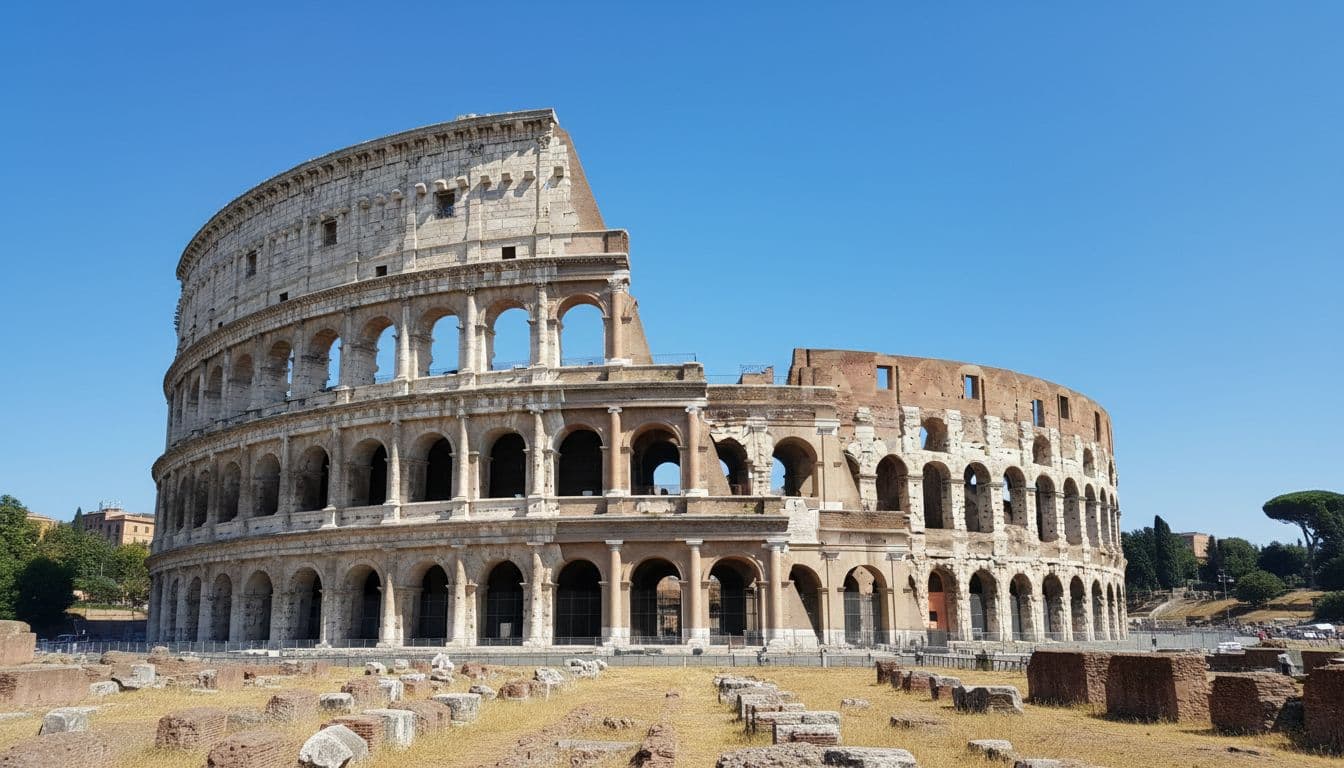
The design was both sophisticated and enormous. Rings of arches distributed the weight, while hallways and stairways transported crowds through the structure at startling speed. Numbered entries directed individuals to the appropriate sections, allowing thousands to enter and exit without causing confusion. The outer shell formerly rose around 160 feet, contributing to the impression. The oval form put people close to the action. Later development beneath the arena included tunnels, lifts, and trapdoors for large events. Modern stadiums still follow this fundamental reasoning because it works.
What happened inside the arena during ancient Roman games
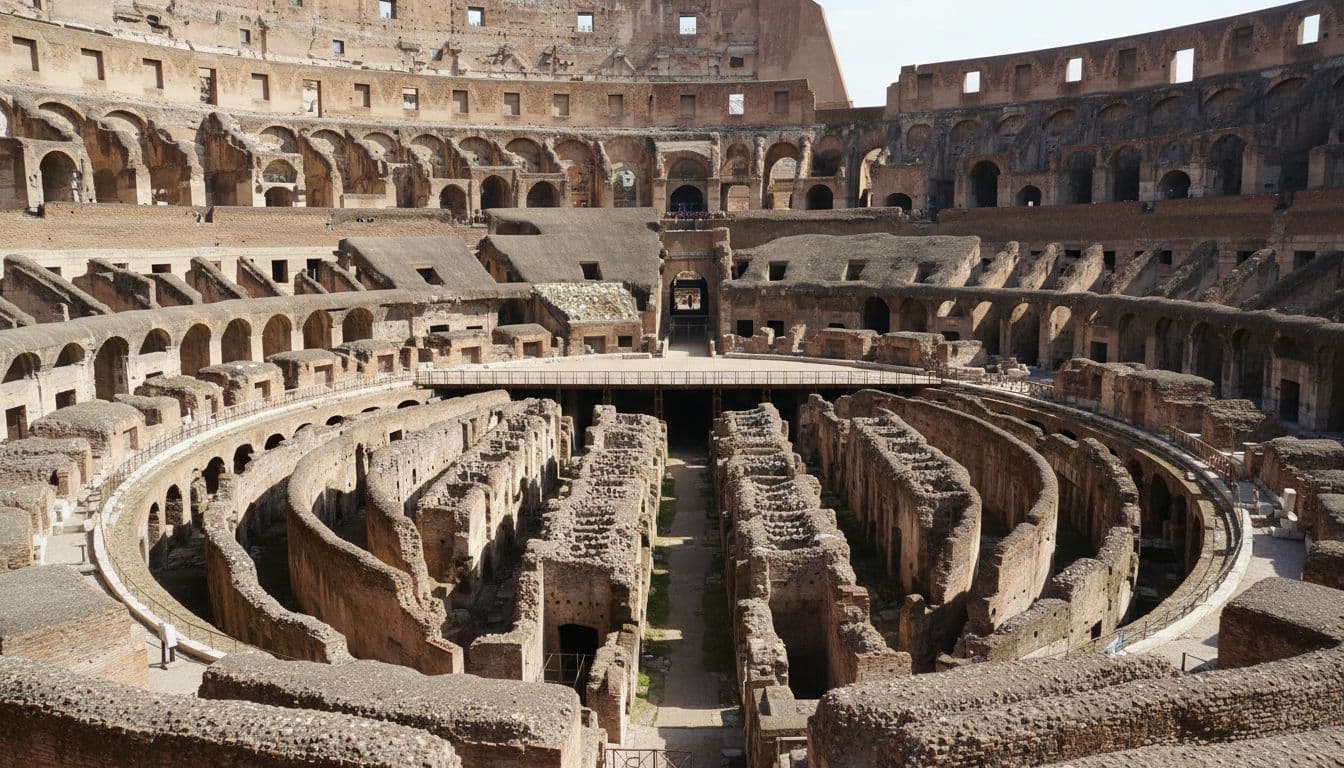
Inside, the Colosseum served as a public entertainment machine. The arena floor, which was originally covered with sand, transformed state power into a spectacle that everyone could enjoy together. The hardwood floor concealed most of the equipment beneath. Games honored rulers, commemorated festivals, and provided the audience with a shared experience. However, the location served as a reminder of who was in charge.
Gladiator battles, wild animals, and public spectacles
Crowds gathered to see gladiator fights, animal hunts, staged dramas, and, on occasion, executions. These activities were well planned and adhered to strict timetables and guidelines. Workers oversaw landscape, animals, fights, and scheduling, so the day felt planned rather than chaotic. Some productions employed set and accessories to recreate mythological situations onstage. Some gladiators trained for years before becoming popular with the populace. For the Romans, this was both mass amusement and civic theater. Emperors could pay for the games, feed the multitude, and seem benevolent to the city.
How the seating showed the structure of Roman society
Where you sat was almost as important as what you saw. The Emperor and Senators enjoyed the finest seats. Wealthy individuals sat near together, while common folks occupied the upper rows. Women and impoverished spectators were forced further up. People with the lowest status, including many enslaved or dependent guests, remained on the fringes. The arena represented Roman society in stone. Entertainment did not eliminate inequality. It presented it.
What the Colosseum looks like now, and why people still visit it
The Colosseum is now partially shattered, yet its form still strikes you at once. Large parts of the outside wall remain, and the interior rings still demonstrate how the structure previously functioned. Restoration and careful management now assist to conserve what remains. Tourism keeps the place active during much of the year. Because it is near the Roman Forum and Palatine Hill, a visit ties one monument to the larger tale of ancient Rome. It is also included on the UNESCO World Heritage list for Rome's historic core.
The ruins you can see today, and what they reveal about the past
The missing parts are an integral part of the lesson. Over centuries, earthquakes ravaged the edifice, and builders eventually repurposed portions of its stone in churches, palaces, and other Roman structures. What remains, including arches, hallways, sitting lines, and open basement rooms, provide visitors with a good picture of the structure's bones. The arena floor was previously above the hypogeum, as may be seen in the network of rooms below. The ruin seems both open and precise.
Best reasons to add the Colosseum to a Rome trip
The Colosseum is worth seeing since photographs flatten it. In person, the size is easier to understand, and the stone's weathering adds to the sense of time. Travelers may combine it with surrounding ruins in a single stroll, while scholars and history buffs have a rare opportunity to interpret architecture practically like a text. That is why it remains a must-see attraction in Rome. Even individuals who know little about Rome frequently depart with a better understanding of how the empire appeared in everyday life.


No comments:
Post a Comment